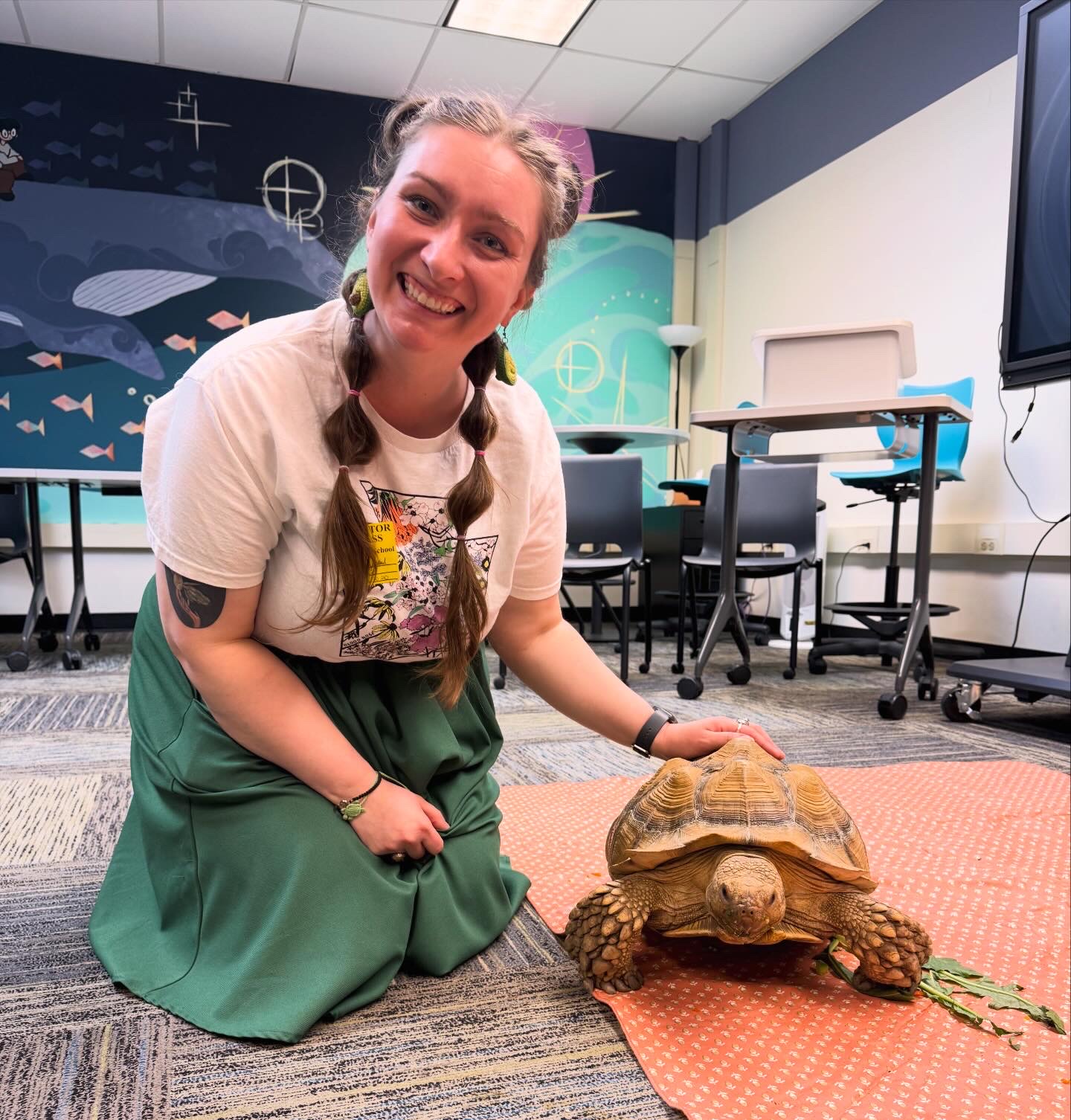
My name is Alexis, and I am very excited to welcome you to my next chapter! I am an ecologist and environmental educator living in the Greater Pittsburgh Region. I have been involved with Environmental Education since 2011 and am excited to build an organization centered around my values of compassion, education, community, intersectionality and inclusion. I have many goals for myself and this organization, and I am so grateful for the kindness and support that I have already received.
This year, I have several goals that I hope to accomplish.
Provide environmental education programming in my community
- I will be collaborating with local libraries, parks and other community organizations to host fun and educational programming locally. Check my Events page to see what’s going on!
- I will be working with my neighborhood to provide more environmental education, build community and educate folks about our local flora and fauna. I have presented at our local summer camp and have been helping to plan our Community Day Celebration. You can visit me at the Celebration on August 15, 2026!
- Want to plan something together or bring me to your school, community group or organization? Reach out to me via my Contact Page, or email me at education@alexisnouveau.com.
Earning my 501c3 Status
- Having non-profit status will help me to build a community focused organization with education, conservation and rescue in mind. All money raised for this organization will go back into the mission of educating the public about nature through environmental education programming, rescue and conservation.
- I will be running my finances as a non-profit organization until I earn my status as well.
Obtaining appropriate permits for working with wildlife educational ambassadors and salvaged specimens
- Working with rescued wildlife has always been a passion of mine. My current menagerie includes a Sulcata Tortoise named Shango, a Blue-Tongued Skink named Ambrose and a pair of African Millipedes named Darrell and Donna. I aim to provide a home for more creatures who I can work with to educate the public.
- So far, this project has included petitioning my local ordinance to allow for me to house rescue animals to be used for environmental education programming. I wrote a proposal and spoke at a council meeting about the benefits of environmental education, my experience and my plans for what I could build to house animals on my property. The ordinance was rewritten to allow exceptions for housing animals used for educational purposes, and it will be going to a vote in July!
- Eventually, I would like to steward land and provide a home to more creatures that need to be rescued. This is a goal for the future!
Thank you for joining me and supporting me during this new chapter. I cannot wait to see what the future holds for myself and my community of wildlife professionals and environmental educators. We are going to do great things!
Wanna Collab? Send me a message and let’s talk!
Heated Rivalry “Loonacy“
So, you’ve been just as obsessed as I have been with a certain hockey show, and now you are interested in loons and seeking connection with anything that reminds you of the show. Clearly, I am right there with you. In celebration of PRIDE Month this June, I am going to talk about the Stupid Canadian Wolf Bird – the Common Loon!
Let’s talk about loons. According to ebird, we see Common Loons migrating through PA from the end of March til early June. We can see them as they migrate through the area to get to their summer breeding grounds in Canada. Surprisingly, Common Loons can be seen all the way down to Florida!
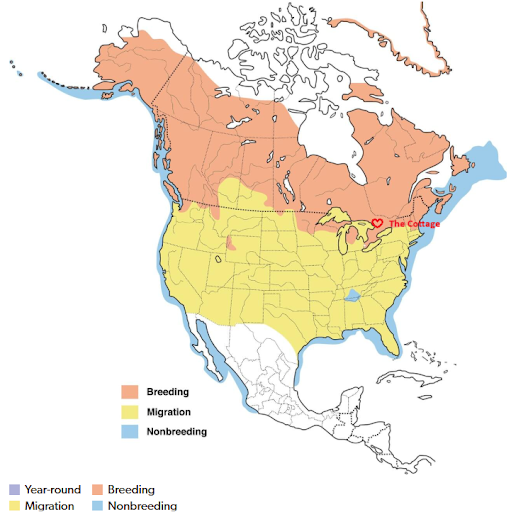
Common Loons are the most widespread species of loon that breeds in North America. Yellow-Billed (Gavia adamsii), Red-Throated (Gavia stellata) and Pacific loons (Gavia pacifica) are rarely seen in PA. These species are occasionally observed further south during migration. Arctic loons (Gavia arctica) live on waterbodies in northern Europe and Asia and look very similar to Pacific loons. (According to the Adirondack Center for Loon Conservation).
Loons are obligate water birds, which means they depend on the water around them for all that they need. Loons rarely venture on land, only walking on land to build a small nest on the ground. They prefer to nest in patches of floating plant life or in reeds close to the shore.
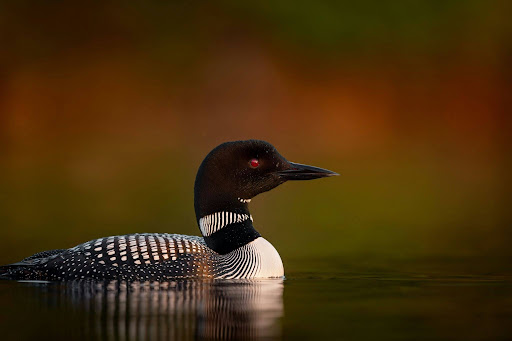
Photo by Ray Hennessy on Unsplash
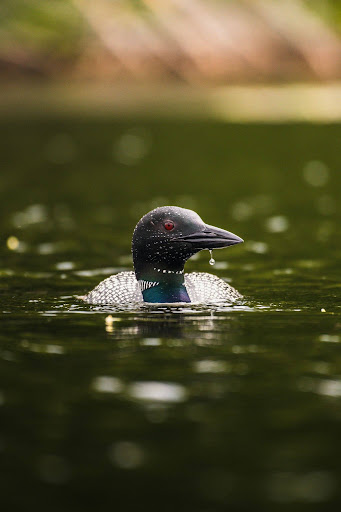
Photo by Jeremy Hynes on Unsplash
Their tuxedoed bodies are built like little submarines, diving and snatching fish out of the water. Unlike many other birds, loons have solid bones, making it easier for them to quickly compress air out of their lungs and dive under the water. You can check out scans on their skeletal anatomy courtesy of the Idaho Virtual Museum.
Typical bird bones have a crisscrossing structure that provides support to the bones, and also allows birds to be able to fly.
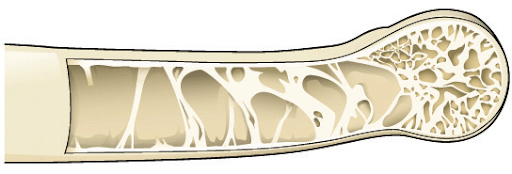
Sterling, John & Jaramillo, Alvaro & Hayes, Floyd. (2015).
Bird Guide Training Curriculum: Advanced Level
Because loons are adapted to spend most of their time in the water, they need a runway of water to take off into the sky. Depending on the wind, they need at least 30 feet of water to get to speed before they can fly. Once they take off, loons can be surprisingly fast flyers! Some birds have been clocked migrating at speeds around 70 miles per hour!
Wildlife Rehabilitation
Wildlife Rehabilitators across the country are sometimes brought loons that have become grounded. Migrating birds can land in a parking lot or a large puddle that may look like the reflective surface of water from above, but are then unable to take off again.
Rehabilitators are always cautious around this bird’s dagger-like bill. Wildlife professionals always wear eye protection when working with birds like loons, since they will hunt by using their bill to pierce their prey.
If you come across a loon in a parking lot, or somewhere far away from water, it will need assistance. If you can safely get to the bird, you can place a towel over the bird and transfer it to a box with holes in it before transporting it to a local wildlife hospital. If you are in Pennsylvania, you can search for wildlife rehabilitators that accept waterbirds by going to www.pawr.com. If you cannot safely get to the bird, please report the bird to the folks at Wildlife in Need. If you are unsure, give your local wildlife hospital a call and leave a voicemail with the details.
HPAI Warning: Check with the PA Game Commission about updates to zoonotic diseases like Avian Flu. Some wildlife hospitals may not accept water birds due to increases in Avian Flu in the area, so always check with the wildlife hospital before taking a patient in.
Calls & Communication
Loons are known for their eerie calls and yodels. The call that spooks Ilya and elicits the nickname “Stupid Canadian Wolf Bird” is a yodel similar to this one recorded in Ontario. Male Loons will use this yodel to establish their presence to other loons in the area, and to stake claim on a territory. Their yodels may change when they relocate and establish new territory, and you can often hear them calling back and forth to each other to determine each other’s location. Shane’s responding tremolo – similar to this call recorded in British Columbia – can be an alarm call or is a response to let other birds know of his presence. I for one am glad that Shane knew the correct way to respond and protect Ilya from the wolf bird!
How to Help Loons
Though Common Loons have stable populations, they are impacted negatively by human interactions. Here are a few things you can do to keep Loons and other animals safe.
- Non-lead Ammo and Fishing Tackle
- Clean up fishing line and other fishing litter debris when you see it
- Keep your distance from nesting loons, reel in your line when you see waterfowl present.
- If you see an animal that needs help, call your local wildlife hospital and describe the situation. Even injured, waterfowl like loons are adapted to move in the water, and will be faster than you. An injured bird will still try to defend itself and get away from you. Be safe in these situations, and seek the advice of professionals like the folks at WIN or a Wildlife Rehabilitation Center.
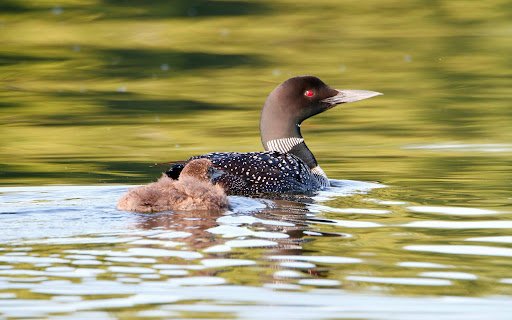
Photo by Paul Crook on Unsplash
It is said that great art comes when we need it most, and I think that stands true for this show. Watch out for your neighbors, find joy where you can, and maybe share these new loon facts with them. You never know who else in your community likes birds and hockey romances.
Sources
All scientific information discussed in my writing is always researched and verified at the time it is published. Science is an ever-evolving field, so it is possible to have more accurate information as time goes on. I will do my best to update these posts if any new research is released, but there are only so many hours in a day. I always recommend verifying info with another source that you trust. My sources are below! Stay curious, folks!
- Common loon overview, all about birds, Cornell Lab of Ornithology. Overview, All About Birds, Cornell Lab of Ornithology. (2026). https://www.allaboutbirds.org/guide/Common_Loon/overview
- Common Loon – eBird. (2026). Ebird.org. https://ebird.org/species/comloo/US-PA
- Center, A. (2019). Adirondack Center for Loon Conservation. Adirondack Center for Loon Conservation. https://www.adkloon.org/